
They Came to Me for a Website. I Gave Them a World.
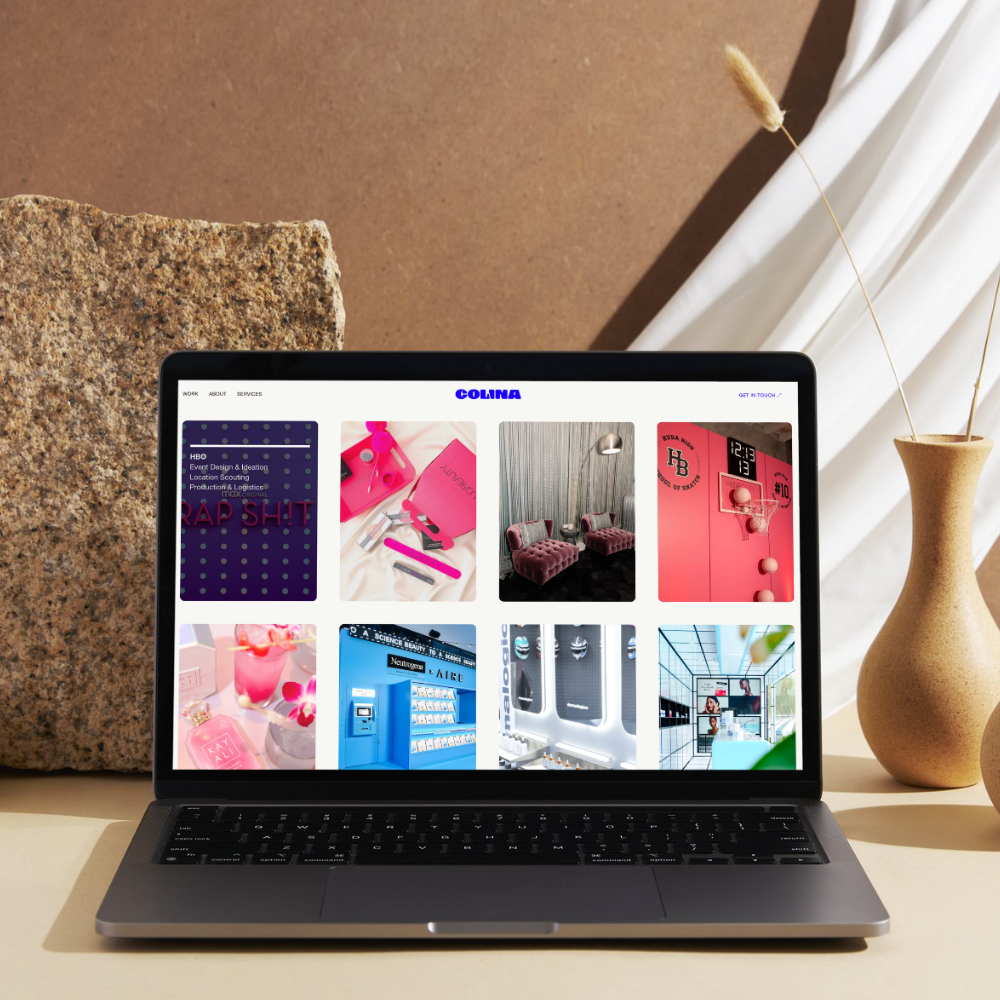
How a Website Project for Colina Became Something Much Bigger
Colina originally came to Die Free Studios for a website. The brief was straightforward: clean up what they had, elevate it, and create an online presence that better reflected the level they were already operating at.
On the surface, that made sense. But once I got into the work, it became clear that a better website alone was not going to solve the problem. What Colina had built and how the brand was being expressed were two very different things.
The Website Wasn’t the Real Problem
Colina was already producing high-level work. The execution was strong, the experience was there, and the company was not trying to establish credibility from scratch.
What was missing was a clear world around the work.
Individual projects could stand on their own, but there was no consistent visual language, perspective, or experience connecting them. Without that foundation, every new decision had to be made from scratch instead of building on something recognizable.
That is why we did not start with the website. We started with Brand Therapy.
We looked at what Colina was already known for, where they were strongest, which projects they wanted more of, and how the work should feel when the brand was operating at its best. Once we understood that, the website became only one expression of a much larger system.
We Defined the Creative Direction First
Before designing pages, we established the visual and emotional language of the brand. We clarified the imagery, tone, restraint, expression, and overall feeling that should guide Colina moving forward.
This gave us a filter for future creative decisions instead of treating every project as an isolated moment.
Photography Became Part of the Brand System
We also developed clear photography direction around composition, lighting, environments, subject matter, and texture.
The goal was not simply to collect stronger photographs. It was to make sure that whether someone encountered Colina through an event, campaign, photoshoot, or website, the imagery felt like it belonged to the same world.
The Identity Needed to Hold the Work
The visual identity was refined to support the level of work rather than compete with it. The system became more controlled, intentional, and flexible enough to work across the different environments Colina moves through.
Instead of designing for one website launch, we were creating a visual foundation that could continue supporting the brand.
Then We Designed the Website
By the time we reached the website, many of the most important decisions had already been made. We knew what Colina needed to communicate, how the work should be positioned, and what the visual experience needed to feel like.
The site became a translation of that strategy through clearer positioning, stronger storytelling, cohesive imagery, and a digital presence that finally matched the quality of the work.
What Changed?
The biggest shift was not aesthetic. Colina moved from simply presenting individual projects to expressing a clear point of view across the brand.
The work could now compound. New projects, imagery, content, and experiences had a larger system to belong to rather than existing as disconnected pieces.
That is what world-building looks like in practice. It is not about adding more things to a brand. It is about creating enough clarity that everything you do reinforces the same identity, story, and experience.
Colina came to us for a website. What they needed was a world the website could live inside.
Want More Behind-the-Scenes Brand Transformations?
Join the Die Free Studios newsletter for case studies, brand strategy, and a closer look at how we build the worlds behind the work.