What Should a Wedding Website Include? A Complete Checklist for Couples
The checklist most couples wish they had earlier
Couples don’t realize they’re missing key pieces from their wedding website until the questions start coming in.
Not one or two but the same three or four questions, over and over again.
“What time should we arrive?”
“Where should we stay?”
“Can I bring a plus one?”
It’s rarely because the information isn’t there. It’s because it’s unclear, incomplete, or hard to find.
This is the checklist most couples wish they had from the beginning.
Homepage / Welcome page
This is your first impression.
It tells your guests they’re in the right place, sets the tone for your wedding, and gives a quick sense of what to expect. It should feel intentional—not just a title and a date, but a clear entry point into everything that follows.
Our Story
Optional but meaningful.
This is where your site becomes more than logistics. It gives guests context, especially for those who may not know you both well. It’s one of the most visited sections, because people genuinely want to feel connected to what they’re attending.
Ceremony Details
This is one of the most important sections and one of the most often under-explained.
Include the exact location, start time, arrival guidance, parking information, and any accessibility notes. If guests have to guess even one of these, they’ll reach out.
Reception Details
Don’t assume guests know what happens after the ceremony.
Spell it out clearly: where it’s taking place, when cocktail hour begins, what the flow of the evening looks like, and anything they should expect (outdoor setting, late end time, etc.).
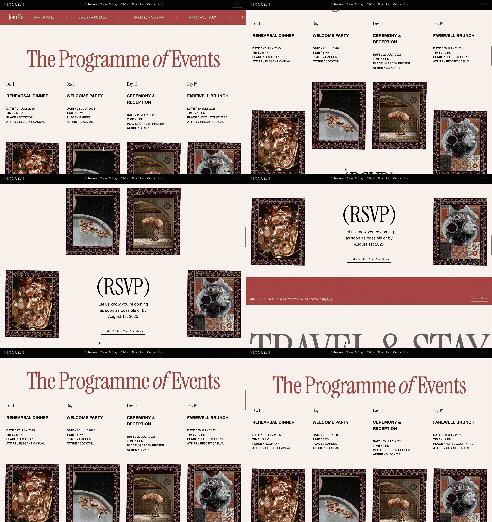
Make it stand out
Whatever it is, the way you tell your story online can make all the difference.
RSVP
This should feel simple on the guest side but it requires clarity on yours.
Include a clear deadline, specify whether plus-ones are allowed, and add meal selections if needed. The fewer assumptions here, the smoother your final headcount will be.
Accommodations
Make it easy for your guests to say yes.
Share your hotel block with a direct booking link, include deadlines, and offer a few alternative options at different price points. The more straightforward this is, the less back-and-forth you’ll have.
Travel / Getting There
Especially important for out-of-town or destination weddings.
Include airport details, transportation options, and any guidance that helps guests move confidently from arrival to venue. This section removes a lot of uncertainty before it starts.
Dress code
Be specific.
“Black tie optional” sounds clear but for many guests, it isn’t. Give examples or guidance so people feel confident showing up appropriately dressed without second-guessing.
Registry
Keep this simple.
Link out to your registry rather than embedding it. It’s cleaner, easier to navigate, and avoids unnecessary friction for your guests.
FAQs
This is where you answer the questions you’re already getting and the ones you know are coming.
Think: plus-ones, kids, transportation, timing, dress code clarification. A strong FAQ section can eliminate most guest messages before they happen.
Photo gallery
This is where personality comes in.
Engagement photos, candid moments, or even your wedding party. This section adds warmth and makes the experience feel more personal.
When it starts to feel like a lot
Because it is.
You’re not just building a website. You’re organizing your entire wedding into something your guests can easily understand and navigate.
And if building all of this feels overwhelming, that’s exactly what we do at Die Free Studios.
We design custom wedding websites that handle all of this and actually look like you.
Ready when you are
If you want a site that feels clear, complete, and effortless for your guests, you can explore what that could look like here.